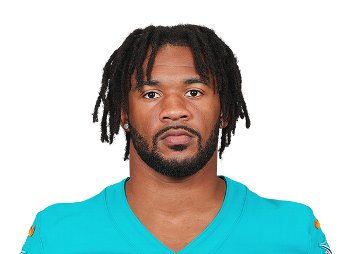
Cam Riley
LB · Tennessee Titans
Height
6'4"
Weight
228 lbs
Age
24
College
Florida State
Draft
Undrafted
Experience
0 yrs
LB Rank
#161 / 339
B-
F
C
N/A
Fan VerdictWhat's your verdict?
Grade Cam Riley
Your grade joins the crowd-sourced Fan Verdict.
The Verdict on Cam, in One Read
On the field, Cam Riley grades out as a middling LB for Tennessee Titans (C Performance). That places him 161st of 339 graded linebackers. Against that production, his deal reads as good value on the Contract Value Index (B-) — the team is paying below what the play would command. The public read is sharply negative (F Sentiment), drawn from current news and social signal rather than the box score. As a prospect, expect these grades to move quickly as a real sample builds.
Current Contract
Length
2 years
Total Value
$1.9M
AAV
$968K/yr
Contract Value Index (CVI)
B-
Good Value
OverpayFair ValueGreat Value
Cam Riley delivered the kind of production that earns a B- Contract Value Index relative to the LB pay band. On a $967,500 AAV deal over two years, Riley is priced as a depth piece — and his 2025 season performance absolutely justified that positioning: across three games, he logged nine tackles, a statistical footprint so minimal it offers no distinction from the dozens of minimum-contract linebackers cycling through NFL rosters at any given moment. At 24 in his rookie season, Riley was supposed to have development runway, but the Titans' immediate post-draft decision to release him alongside five other players signals the organization has zero confidence in that upside and views him as interchangeable depth rather than a prospect worth developing. The CVI grade reflects a contract that is theoretically appropriate for a third-string linebacker — the money is negligible, the term is short — but his C-level performance, combined with his F sentiment grade and the franchise's decisive waiver of him to clear space for incoming undrafted free agents, underscores that even replacement-level pricing cannot salvage a situation where a team has already decided you're expendable. Riley now faces a steep climb back onto an NFL roster, with his only realistic path running through a training camp invitation from a rebuilding squad willing to take a developmental flier on a player who has yet to establish any on-field identity or public investment.
Contracts in the Same Value Band
Other same-position deals the Contract Value Index also places in the B band — a quick read on where Cam's contract sits relative to comparable money.
Performance Analysis
C
#161 of 339 LBs
FCA+
Cam Riley is a 24-year-old rookie linebacker for the Tennessee Titans who has yet to appear in an NFL game, leaving his professional durability profile entirely unwritten at this stage of his career. Selected in the draft to develop within the Titans' defensive system, Riley enters a crowded linebacker room where opportunity will depend heavily on his ability to earn snaps through training camp and preseason performance. The absence of game experience—zero appearances—is the most significant factor in evaluating his near-term reliability, as NFL defenses demand both physical durability and the mental toughness that only competitive reps can forge. Riley projects as a backup-to-developing contributor given his current standing, with his role likely confined to special teams and situational linebacker packages until he demonstrates he can stay healthy and absorb the playbook at speed. What scouts will monitor closely is whether he can translate his college tape into consistent run-fill responsibilities and blitz recognition—the foundational skills required to ascend from fringe-roster status. The next 12 months will be critical in determining whether Riley becomes a reliable reserve or fades into roster churn; his trajectory hinges entirely on avoiding injury and proving he can process the game at NFL tempo.
How Cam Compares at the Position
Cam Riley ranks 161st of 339 graded linebackers by performance. That slots Cam between Derick Hall (C) just ahead and Keir Thomas (C) just behind.
Graded higher
Derick HallSeattle SeahawksCChris Paul Jr.Seattle SeahawksCIvan Pace Jr.Minnesota VikingsCCam RileyC
Graded lower
Keir ThomasLos Angeles RamsCurrent Sentiment
F
Very Negative
NegativeNeutralPositive
Cam Riley's public perception sits at rock bottom, with an F sentiment grade that accurately reflects the near-total indifference surrounding his release from the Tennessee Titans. The dominant media narrative is blunt and unambiguous — Riley was one of six players waived in the immediate aftermath of the 2026 NFL Draft specifically to clear roster space for incoming undrafted free agents, a move that every major coverage angle characterized as ruthless but necessary, and one that signals he was viewed as nothing more than interchangeable depth. That framing aligns directly with his D+ performance grade; across three games in the 2025 season, Riley managed just nine tackles, the kind of limited statistical footprint that does nothing to distinguish a minimum-contract linebacker from the dozens of similar profiles cycling through NFL rosters at any given moment. The Titans' post-draft roster activity only reinforces the perception of his expendability — the team simultaneously signed new linebacker Mani Powell while cutting ties with Riley, making the positional replacement as direct and transactional as it gets. Fan reaction has been functionally nonexistent, which in many ways is a harsher verdict than outright criticism; Riley never generated enough on-field moments or personality to build any public investment in his trajectory. The narrative today is one of complete irrelevance — a player released before he could establish any identity with the franchise, now facing the steep climb of a training camp invitation if he wants any path back to an NFL roster.
📰5 news💭1 ai_analysis
Transaction History
No transactions found for this player.
News & Buzz
Live Discussion
Auto-moderated fan forum with 5-minute speaker turns
Discussion
Loading discussion...
Explore the leaderboards
About this player
Cam Riley is a player on a rookie-scale contract listed at LB for the Tennessee Titans. FanVerdicts covers every NFL player, team, GM, and transaction — and puts your verdict on all of it. Sign in to cast your Fan Verdict on Cam Riley, see where the crowd lands, and argue the call. FanVerdicts also brings its own read — performance, sentiment, and Contract Value Index — as one honest input alongside the crowd's. Where FanVerdicts has weighed in so far: Contract Value Index B-, Performance C, Sentiment F.
The crowd's Fan Verdict moves in real time as fans vote on this profile. FanVerdicts' own read updates as new data lands — performance recalculates when NFL game stats post, sentiment shifts with media coverage and fan discussion, and the Contract Value Index recomputes when contract terms change. Contract details below show the structure (years, total value, average annual value, guarantees) behind the Contract Value Index read.
For league-wide context, the NFL hub has team rankings, GM report cards, the transactions feed, and live scoreboards. The NFL player rankings page sorts every active player by performance and contract value within their position.