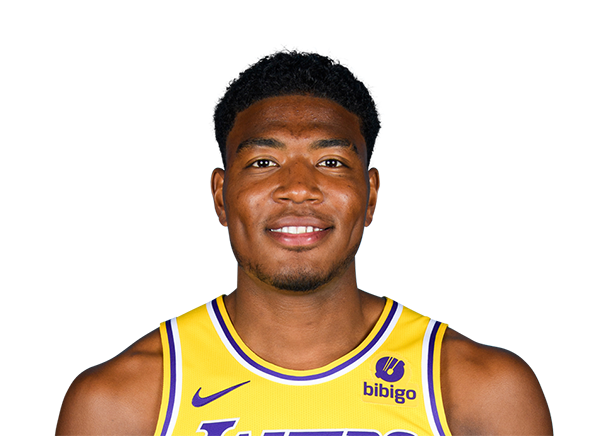
Rui Hachimura
#28PF · Los Angeles Lakers
All-Rookie 2nd Team '20
Sharpshooter
Height
6'8"
Weight
230 lbs
Age
28
College
Gonzaga
Experience
6 yrs
F
B+
D
C-
N/A
Fan VerdictWhat's your verdict?
Grade Rui Hachimura
Your grade joins the crowd-sourced Fan Verdict.
The Verdict on Rui, in One Read
On the field, Rui Hachimura grades out as a shaky PF for Los Angeles Lakers (D Impact). That places him 73rd of 84 graded power forwards. In his on-court role, the grade is middling (C- Role), reflecting how he produces relative to others at his position. The contract is harder to defend: the Contract Value Index calls it a significant overpay (F), with the cost outrunning the output. The public read is positive (B+ Sentiment), drawn from current news and social signal rather than the box score.
Career StatsD-
| Year | Team | GP | PPG | RPG | APG | SPG | BPG | FG% | 3PT% | FT% |
|---|---|---|---|---|---|---|---|---|---|---|
| Career |  | 396 | 11.1 | 3.2 | 0.8 | 0.5 | 0.3 | 50.5% | 39.2% | 76.4% |
| 2025-26 | | 59 | 11.1 | 3.2 | 0.8 |
Performance Grade by Season
PeakCLongevityEstablishedRecentD+
| Season | Team | GP | PTS | REB | AST | FG% | Grade |
|---|---|---|---|---|---|---|---|
| 2025-26 | | 59 | 11.1 | 3.2 | 0.8 | 50.5% | D D |
| 2024-25 | | 5 | 14.8 | 4.6 | 1.0 | 49.1% | C C |
| 2023-24 | | 5 | 7.8 | 3.8 | 0.8 | 39.5% | F F |
| 2022-23 | | 16 | 12.2 | 3.6 | 0.6 | 55.7% | D D |
| 2021-22 |  | 42 | 11.3 | 3.8 | 1.1 | 49.1% | D+ D+ |
| 2020-21 | | 5 | 14.8 | 7.2 | 1.0 | 61.7% | C C |
| 2019-20 | | 48 | 13.5 | 6.1 | 1.8 | 46.6% | C C |
Grades reflect the player's performance in each season. Header grade shows the current season.
Recent Games
| Date | OPP | Result | MIN | PTS | REB | AST | STL | BLK | FG | 3PT | +/- |
|---|---|---|---|---|---|---|---|---|---|---|---|
| Tue, 5/12 | vs OKC | L 110-115 | 43 | 25 | 5 | 2 | 0 | 1 | 9-15 | 4-8 | -2 |
| Sun, 5/10 | vs OKC | L 108-131 | 39 | 21 |
Current Contract
Length
1 year
Total Value
$18.3M
Guaranteed
$18.3M
AAV
$18.3M/yr
Guaranteed %100%
Contract Value Index (CVI)
F
Overpay
OverpayFair ValueGreat Value
Rui Hachimura earns an F Contract Value Index (CVI) — an unambiguous rejection of the deal on pure value terms. At $18.3M annual average on a one-year deal, he's being paid as a franchise cornerstone while producing as a solid rotation piece: his 2025-26 season delivered 11.1 PPG, 3.2 RPG, and 0.8 APG across 59 games, paired with a D- performance grade that reflects middling production relative to his salary tier. That price point for a power forward sitting in the fifth-option scoring range is fundamentally misaligned; the market does not compensate depth starters at nearly that rate unless they anchor a playoff run with elite perimeter defense or rebounding authority — neither of which Hachimura provides at scale. At 28 with seven seasons on his résumé and only an All-Rookie 2nd Team selection to his name, he occupies the unglamorous middle ground where organizational confidence has capped out: recent team activity signals the Lakers view him as replaceable rather than cornerstone-immovable, a reality underscored by concurrent interest in external upgrades at his position. The sentiment context tells the real story — media and fans respect his clutch reliability and recent playoff contributions, but that B+ narrative sits atop a floor of skepticism about difference-making capacity in a deep run, and the front office clearly shares that ceiling. One year remains on this contract, which prevents long-term cap damage, but the damage to value has already been done: he is being overpaid relative to his tier, and the organization's own behavior confirms they know it.
Performance Analysis
D-
#73 of 84 Power Forwards
Contracts in the Same Value Band
Other same-position deals the Contract Value Index also places in the F band — a quick read on where Rui's contract sits relative to comparable money.
How Rui Compares at the Position
Rui Hachimura ranks 73rd of 84 graded power forwards by performance. That slots Rui between Noah Clowney (D-) just ahead and Jordan Walsh (D-) just behind.
Graded higher
Noah ClowneyBrooklyn NetsD-Trendon WatfordPhiladelphia SixersD-Carter BryantSan Antonio SpursD-Rui HachimuraD-
Graded lower
Jordan WalshBoston CelticsTransaction History
No transactions found for this player.
News & Buzz
Live Discussion
Auto-moderated fan forum with 5-minute speaker turns
Discussion
Loading discussion...
Explore the leaderboards
About this player
Rui Hachimura is a player in his 6th NBA season listed at PF for the Los Angeles Lakers. FanVerdicts covers every NBA player, team, GM, and transaction — and puts your verdict on all of it. Sign in to cast your Fan Verdict on Rui Hachimura, see where the crowd lands, and argue the call. FanVerdicts also brings its own read — performance, sentiment, and Contract Value Index — as one honest input alongside the crowd's. Where FanVerdicts has weighed in so far: Contract Value Index F, Performance D-, Sentiment B+.
The crowd's Fan Verdict moves in real time as fans vote on this profile. FanVerdicts' own read updates as new data lands — performance recalculates when NBA game stats post, sentiment shifts with media coverage and fan discussion, and the Contract Value Index recomputes when contract terms change. Contract details below show the structure (years, total value, average annual value, guarantees) behind the Contract Value Index read.
For league-wide context, the NBA hub has team rankings, GM report cards, the transactions feed, and live scoreboards. The NBA player rankings page sorts every active player by performance and contract value within their position.